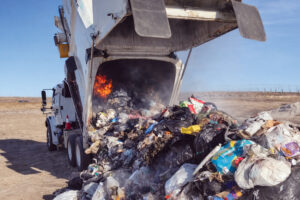
A fire is seen ignited in the back of a waste management truck. Items like batteries are a dangerous addition to any landfill, as they can generate heat and create what crew call a 'hot load.'--SUBMITTED PHOTO
Most residents don’t see what happens after a garbage truck leaves their street. Waste is collected, transported, and managed through systems designed to keep the city clean and operating smoothly. But occasionally, hidden within everyday trash are items that can create unexpected challenges for city crews working in garbage trucks and at the landfill.
One of the most common risks is with something that many people use every day – batteries.
While larger reportable landfill fires are rare, staff more commonly encounter smaller smouldering incidents caused by improperly disposed batteries that become damaged or compressed during collection and processing. These situations are typically contained quickly but can still interrupt operations and create risks for staff, equipment and the environment.
Sometimes the problem begins before materials even reach the landfill. Inside garbage trucks, compactors apply significant pressure to the waste they collect. If a battery is caught in that process, it can generate heat and create what crews refer to as a “hot load,” where materials begin to smoulder inside the truck.
Waste crews also encounter residential carts and commercial bins that ignite due to improper disposal of hazardous materials such as batteries, pressurized tanks, or even hot ashes placed in the garbage before they have fully cooled.
When these situations occur, crews must respond immediately. Equipment and staff are redeployed to manage the material safely, monitor temperatures, and prevent the situation from spreading. Even smaller smouldering events can create operational delays and additional wear on heavy equipment, adding to the cumulative cost of managing waste safely.
Behind the scenes, landfill and collection staff are trained to recognize and respond to these hazards quickly. Their work helps ensure situations are contained before they escalate and that safe working conditions are maintained across the waste management system. In some cases, Medicine Hat Fire & Emergency Services may also be called to assist crews in managing the situation safely.
While some risk is unavoidable in waste management, there is one simple action that can significantly reduce the most common preventable cause of these events:
Proper battery recycling.
Recycling batteries – including AA, AAA, and lithium-ion batteries – keeps them out of the garbage stream entirely, preventing them from being crushed or damaged during collection.
There are many local drop-off locations across Medicine Hat, and residents can visit recycleyourbatteries.ca to find a recycling location near them.
Kelli Ireland is fire and life safety educator for Medicine Hat Fire & Emergency Services. Shane Briggs is manager waste & recycling with environmental utilities.