Revenue drops nearly 65% in year after photo radar changes
By ZOE MASON on April 9, 2026.
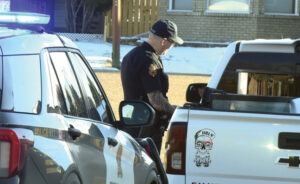
In the year since the provincial government applied major restrictions on use of photo radar, revenue for the City of Medicine Hat has gone from more than $1 million to $360,000, while police have focused more resources on significantly increasing traffic stops.--NEWS FILE PHOTO
In the year since photo radar rules changed in the province, the police department in Medicine Hat has had to manage more speeding with fewer resources.
The UCP government prohibited most photo radar locations across Alberta beginning Apr. 1 2025, limiting cameras to school and playground zones, as well as construction zones.
“We have officially killed the photo radar cash cow and the revenue-generating ‘fishing holes’ that made Alberta the biggest user of photo radar in Canada,” Minister of Transportation and Economic Corridors Devin Dreeshen said last year.
Medicine Hat Police Service chief Alan Murphy says it’s difficult to pinpoint how much speeding has changed since the policy changed, but he says consensus is that it has worsened.
“What I see in our community is that people are driving faster than they were previous to the photo radar changes, and I’ve had other citizens tell me that as well,” he said in an interview with the News.
Photo radar was used since 1987 in Alberta to deter speeding. Without that tool in the police department’s arsenal, they’ve had to compensate in other ways.
This year, the police department has responded by increasing traffic stops. Medicine Hat police officers conducted 650 traffic stops in December. In March, that number grew to 1,550.
Murphy says many of those stops do not result in tickets. Rather, they reflect an effort to make police more visible and increase accountability for drivers in the city.
“In the absence of photo radar, we’re just trying to make up the difference in public education,” he said. “The downside is that it’s human resource intensive.”
Murphy says the department hasn’t added any additional staff to contend with the extra demand, meaning the photo radar change has made additional work for the department that has to be managed by the same number of staff.
“They only have so many hours in a shift. If they’re stopping vehicles, it means there’s something else that we’re not doing. That’s the unfortunate part,” he said. “I would prefer if they were doing more things around community safety as it relates to crime.”
The loss of most photo radar locations has also resulted in a lower revenue stream the city uses for traffic safety.
The revenue produced by photo radar is divided between the province and the municipality along a 40/60 split. The 60 per cent share allocated to the municipality does not go directly back to the police department. Rather, that revenue is used for city road safety and improvement projects.
In 2018, 168 photo radar sites were monitored throughout the city. After the new guidelines came into effect, which only allow photo radar monitoring in school, playground and construction zones, that number dropped to 43 today.
Since the policy changed, revenue has dropped from just over $1.03 million at the end of 2024 to $360,000 at the end of 2025.
Municipalities can apply to have additional sites authorized for photo radar monitoring, but that requires provincial approval on the grounds that other traffic calming measures are ineffective in that area.
Murphy says Medicine Hat is not currently applying for any additional photo radar sites at this time.
19
-18