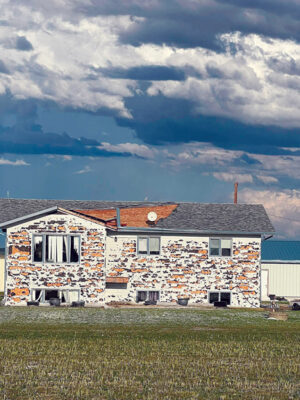
Storm damage in and around Brooks in August made it the third most expensive weather event in 2025, a year that ranked the 10th most costly on record.--FILE PHOTO
asmith@medicinehatnews.com
Last year made the top 10 in insured weather damage, with costs exceeding $2.4 billion.
According to Catastrophe Indices and Quantification Inc, 2025 is the 10th costliest year on record for weather-related insured losses.
The most costly event was the late-March ice storm in Ontario and Quebec, at $490 million in losses, followed by the May wildfires in Flin Flon, Man. and La Ronge, Sask., which cost $300 million.
The prairie storms that caused significant damage in the Brooks area in August came in at third most costly at $235 million in losses, then that significant hail storm in Calgary in July at $160 million and finally the flooding in British Columbia at $90 million.
“Severe weather events continue to intensify. Two decades ago, insured losses seldom surpassed $500 million in a year,” said Celyeste Power, president and CEO, Insurance Bureau of Canada. “Today, annual costs exceeding $1 billion have become the norm. This shift demands that we fundamentally rethink how we build, plan and restore communities across our country.”
Power says the best way to keep communities safe and insurance widely available and affordable is to invest in resilience as means of prevention.
Between 2006 and 2015, Canada’s annual insured losses due to catastrophic weather events and wildfires totalled $14 billion, adjusted for inflation. Between 2016 and 2025 costs have nearly tripled, annual insured losses due to catastrophic weather events and wildfires totalled $37 billion.
Power urged the federal government to “stop putting Canadians in harm’s way.”
“As Canada embarks on a historic housing plan, investing in community and household resilience is significantly more cost-effective than paying to rebuild following every disaster,” said Power. “IBC and its members continue to urge governments at all levels to invest in infrastructure that defends against floods, adopt land-use planning rules that ensure homes are not built on flood plains, facilitate FireSmart initiatives in communities in high-risk wildfire zones and implement long-delayed changes to building codes that better protect homes and livelihoods.”