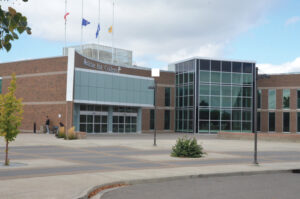
A letter signed by 270-plus members of the Medicine Hat College community asks the college to reconsider a decision to rent space to Rebel News for an Alberta independence event, saying the issue isn't about free speech, rather the credibility and agenda of the organization behind it.--NEWS FILE PHOTO
zmason@medicinehatnews.com
A letter signed by more than 270 members of the Medicine Hat College community is asking the college to reconsider a decision to hold the Alberta Independence Tour stop on its campus.
The tour is being put on by the alternative media outlet Rebel News and is scheduled to visit the Hat on Feb. 27.
One of the key arguments in the letter objects to the fact that the college is the only post-secondary institution listed among the tour stops.
“This is not a trivial reputational detail,” reads the letter. “It invites the reasonable inference that other public institutions of advanced learning in Alberta have declined to lend their premises to this travelling event, while Medicine Hat College has not.”
Diane Gall is an instructor of philosophy at the college. She wrote the letter to submit under her own name earlier this week, but after sharing it with colleagues, she quickly found many of her peers wanted to sign their support as well.
The letter, which includes the signatures of more than 25 faculty and staff members among its signatories, contests the college’s statement from earlier this week that its authorization to allow Rebel News to use the campus space does not denote endorsement.
The letter states the Rebel News event includes ticketed access, merchandise sales and a program focused on political mobilization rather than scholarly inquiry.
“While venue rental doesn’t imply institutional endorsement, we believe it’s legitimate to ask the college to exercise responsible discretion about which external events it facilitates and normalizes through its facilities. When the college rents campus space for a highly political event, reasonable members of the college and the public can interpret the venue as a signal of institutional acceptance or alignment, despite a disclaimer.”
Other venues tapped for the tour have since cancelled their bookings. In its public responses to the backlash, the college says that as an institution of higher learning, it is held to different standards regarding freedom of speech which do not allow it to intervene in booking decisions based on ideology.
Gall says the letter isn’t about freedom of speech at all.
“In fact, we encourage it and want more of it. We have a problem with the organization doing it. It’s not the kind of organization that we would expect higher education to ask or permit to have activities on their ground.”
She pointed to the 2022 Canada Revenue Agency ruling that Rebel News didn’t qualify as a “qualified Canadian journalism organization” for journalism tax credits because it didn’t produce enough original news as an example of why she felt Rebel should have been considered incongruent with the college’s values. That ruling was later upheld by a federal court ruling.
Gall, who lived in Eastern Canada during the height of the Quebec separatist efforts in the 80s and 90s, says she thinks facilitating open discussions about independence is important for confederation.
“I think it is just as important as it was 30 years ago. I just don’t want an organization that is not dedicated to journalism to sponsor an event like this. It’s going to come down to grievance politics, and it’s not going to serve the interests of the college.”
The letter calls on the college to organize a forum for a scholarly, politically-balanced conversation about Alberta independence that demonstrates a “commitment to pluralism and intellectual standards.”
The letter asks the college to release a public explanation of the criteria and process by which the booking was approved.
Earlier this week, the college created a webpage explaining that the booking process does not restrict events based on viewpoint.
The letter also asks the college to sponsor a public forum that approaches the constitutional, economic and social realities of secessionist policies that includes scholarly expertise.