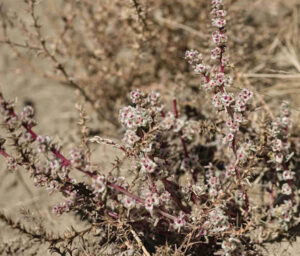
Saltlover, or Halogeton glomeratus, has been found by Cypress County agricultural services. It is highly toxic to livestock and the first infestation found in Canada. Cypress County is working on a strategy to tackle the issue.--SUPPLIED IMAGE
A new noxious plant has been found in the region, requiring a new response.
Halogeton glomeratus, better known as saltlover, is a noxious weed and regulated under the Alberta Weed Control Act. It is also listed on the Canadian Seeds Act. Currently, it has been found in Cypress County and within Special Area No. 2 along the river near Sandy Point.
“It’s the first known infestation in Canada. So this is new for us, certainly new for a lot of the government,” said agricultural services supervisor Lisa Sulz during Tuesday’s county council meeting. “We’re all just kind of working through this and going to figure it out as we go.”
Known to thrive in soil too saline to support many other plants, saltlover is somewhat “inconspicuous” where it has been found to have taken root, says Sulz. She says the specimens they found have clearly been established for several years, where it is often growing alongside other species such as Russian thistle.
The biggest concern however, is the potential impact to producers.
“It’s highly toxic to livestock, specifically sheep. So that’s concerning,” said Sulz. “We had considered putting sheep out along the river in spots for leafy spurge management, and other producers are doing the same in that area.”
Producers have been warned about the risks associated, says Sulz.
Currently, the infestation is believed to mostly be contained to a select area, but these areas have a significant number of plants and are difficult to reach with current equipment. Sulz says officials are exploring options for management, because they “have to do something.”