Advocates have little hope social housing needs in Quebec will be addressed soon
By Canadian Press on April 7, 2026.
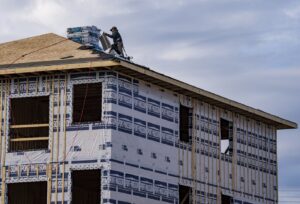
MONTREAL — Brique par brique, a non-profit that builds housing in Montreal, has been trying to develop more city-owned land for years, but the group says securing money for new projects is getting harder.
Over the last decade, the City of Montreal has acquired several plots of land through its right of first refusal — the power to purchase land over other potential buyers to develop non-profit housing. Brique par brique is developing 31 units of social housing on city-owned land in the Parc-Extension district, but it says it has the capacity to do so much more — if the provincial government unlocks the money.
“We have tons of opportunities. Tons. We have a whole massive list. But every time I look at them, I’m like, well, I don’t have the money,” said Faiz Abhuani, executive director of Brique par brique.
Abhuani and other housing advocates had hoped that the new Quebec budget, released in March, would include major investments for housing — as the government had said the issue was a priority — but they were disappointed. They say Quebec’s planned investments for the next four years are nowhere near enough to tackle the housing crisis, as rents keep going up.
Quebec’s affordable housing program — which gives subsidies to both private developers and non-profit organizations — hasn’t issued calls for tenders for projects for low- and moderate-income households since 2023. Social housing is defined by the province as homes that cost a maximum of 25 per cent of a household’s income. Affordable housing, meanwhile, has a looser definition — homes that are listed below market price.
There are hundreds of projects ready to go that cannot get off the ground because of a lack of public funds, says the association that oversees financing and development of low-cost housing in Quebec. “We are part of the solution. The expertise is there, the projects are there, the needs are there,” said Ambroise Henry, president of the Association des groupes de ressources techniques du Québec.
The association says 20 per cent of Quebec’s housing stock must be in the “social” category to meet the needs of low- and moderate-income households and vulnerable people. Provincial government statistics don’t differentiate between social and affordable housing, with the latest data indicating around nine per cent of all renters live in homes defined as social or affordable.
The office of Finance Minister Eric Girard did not respond to The Canadian Press’s request for comment.
The government set aside enough money to build 1,000 units of affordable housing over three years — a drop in the bucket of what’s needed, says social housing advocacy group FRAPRU. Aside from affordable housing, the province needs an additional 231,000 units of social housing over the next five years to meet the needs, according to an alliance of non-profit affordable housing organizations called ACHAT.
“It gives us little hope,” said FRAPRU spokesperson Véronique Laflamme.
Abhuani says projects like his could be set back by years because of a lack of public funds. He adds that the March budget covers some projects already in the pipeline but there isn’t enough money for new housing builds submitted to the government for approval in 2026.
“We already see with … the money that’s in the system, there’s a backlog that’s being created. And unfortunately, a group like us, not only are we going to get stuck in that backlog but we’re going to be deprioritized,” Abhuani said.
Quebec Solidaire finance critic Alejandra Zaga Mendez said 1,000 affordable units are needed in her riding of Verdun alone.
“It’s irresponsible and insulting,” she said of Girard’s budget at a news conference in March.
According to Statistics Canada, asking rents in Montreal increased by nearly 71 per cent between 2019 and 2025. A 2024 Angus Reid survey indicated that 46 per cent of Montrealers rent, the highest percentage of any major Canadian city.
And rents in Quebec hit an all-time high in 2025 with the Canada Mortgage and Housing Corporation reporting an average rent growth of seven per cent across the province despite rising vacancy rates. For units that turned over to new tenants, the average increase was nine per cent.
“This budget does not give the guarantees we were hoping to help low-income tenants desperately seeking affordable alternatives,” Laflamme said.
The city says there are 12,424 Montrealers on the wait-list for social housing.
This report by The Canadian Press was first published April 7, 2026.
Erika Morris, The Canadian Press
23
-22