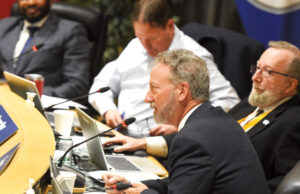
The city is seeking council to approve a 6.1 per cent municipal rate increase for all property taxes in 2026 that would mean roughly $142 more for the average homeowner. Hatters will also see an increase to their education tax portion of approximately $82 following the province's Budget 2026 tabling.--NEWS FILE PHOTO
bmiller@medicinehatnews.com
The city says in order to balance the budget and avoid falling further into debt, councillors must decide on either reducing costs by scaling back services, or increasing property taxes.
During a corporate services committee meeting last week, staffers recommended council approve a 6.1 per cent municipal tax rate increase for all property classes in 2026 that would lead to an $142 average increase for a single-family home.
Coupled with an average increase to the provincial education property tax this year of $82, residents will see an average hike of more than $220 in 2026, if approved later this month.
The 6.1 per cent increase distributed between all property classes would also result in an average increase of $477 for multi-family homes and $501 for non residential properties.
Seeking balanced budget
Property taxes represent approximately 75 per cent of how Medicine Hat generates revenue. In 2026 the budget requires $99.88 million be collected through municipal taxes for services, programs, infrastructure and support for residents.
Due to factors like reduced provincial funding, inflation, fluctuating energy rates and already approved commitments, and without new revenue sources or more migration to Medicine Hat, the city faces a budget gap of more than $10 million.
Lola Barta, interim managing director and CFO corporate services, told committee that broader economic conditions are affecting costs in ways that are difficult to avoid.
“Inflation has been a challenge for everyone from households, businesses and municipalities alike,” said Barta. “The city is experiencing the same pressures. The cost of goods, services, equipment, fuel and salaries has increased significantly, making it more expensive to provide the same level of services residents rely on.”
Barta says construction supplies like concrete, pipes and road equipment have also become more expensive, affecting the city’s ability to maintain and replace infrastructure.
Electricity and natural gas
Additional financial pressures include the uncertainty of revenues generated from fluctuating electricity and natural gas prices.
“When commodities shift, so do the contributions from our energy business units,” explained Barta. “This unpredictability means that there is less stable revenue available to help offset operating costs.”
Between 2021 and 2023 the city experienced unusually high dividend returns and recorded a record high of more than $130 million from electric generation in 2023. However, future profits are not expected to be nearly as high as market conditions normalize.
Barta says by understanding these trends early, it put the city in a better position to adapt to future commodity prices.
“We expect contributions from our energy business units to adjust accordingly. Even with this shift we are well positioned to plan thoughtfully for the future,” she said. “As our energy revenues continue to return to more typical levels, maintaining healthy reserves and using them internally will be the key to support our operations and preserve flexibility.”
Past budget decision
Barta says previous budget decisions, including temporarily funding projects through city coffers and other one-time measures, have also created challenges.
The city is still feeling the impact of a two-year property tax freeze approved in 2020 to support residents during the COVID-19 pandemic, resulting in a $7.5-million revenue loss.
“Council made those decisions thoughtfully to support residents and businesses during the uncertainty of COVID, however the freeze created a cumulative shortfall … This means our tax base today is smaller than it otherwise would have been.”
Funding decreases
Decreased funding from the provincial and federal governments must be supported by taxpayers.
This includes funding reductions that affect both operational and capital budgets, as well as infrastructure and programming.
“So as these funding sources decline, the city becomes more dependent on property taxes to maintain essential services and keep service levels steady,” said Barta.
In a nutshell, Barta says the cost of running the city continues to rise and unpredictable revenue sources make it difficult to offset those pressures.
“Together, these factors contribute to upward pressure on municipal property taxes.”
Education taxes
The City of Medicine Hat is required to collect education tax on behalf of the province, which has announced an increase in Budget 2026 to aid in construction of new schools and reducing classroom sizes.
The province seeks to collect approximately $500 million more through education taxes than in 2025, for a total of $3.6 billion, a 16 per cent increase for all municipalities.
In Medicine Hat, this translates to approximately $82 for the average single-family home assessed at $359,500 in 2026, as the local tax levy is expected to increase by $2.6 million or approximately 9 per cent.
“This increase is outside the city’s control, however it also contributes to the increase in the total tax bill,” adds Barta.
Moving forward
Council will be presented with six property tax rate scenarios on Apr. 7.
Staff recommend council approve “Scenario 3,” designed to balance financial impacts while keeping year-over-year budget changes more predictable, and the 6.1 per cent increase.
If council chooses to run a revenue loss of more than $1.5 million in 2026, the city has also presented a tax scenario that would include an increase of 4.5 per cent.
The motion will come before council for adoption on Apr. 20.
“With careful planning and prudent financial management we can continue to build a stable and sustainable path forward,” added Barta.