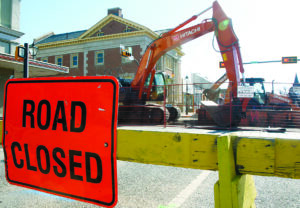
Crews are seen working along Third Street downtown in this news file photo from 2025. City staff are planning to introduce a new interactive online map tool that provides residents real time information on the city's infrastructure and major projects.--NEWS FILE PHOTO
bmiller@medicinehatnews.com
Hatters will soon be able to log onto the city’s website and receive real-time data, conditions and updates on the infrastructure system through an online tool being developed by staff.
The new open data portal tool demonstration was shown to committee members last week and will provide information about roads, power lines and underground pipes.
“So this will allow a nice window for council and the public into viewing readily available information about our infrastructure,” said Jamie Garland, director of environmental utilities.
Members of the development and infrastructure committee were shown a demonstration using the city’s water pipe infrastructure as an example shown in an online map.
Each pipe underground in the entire city is displayed in different colours representing when they were installed.
The oldest water pipes are between 50 and 100 years old and are made of iron-based materials that were the standard, however these pipes tend to corrode over time and are prone to leaks.
Following the iron phase and up to 25 years ago the city switched to installing concrete pipes, however these are sensitive to shifts underground and can easily fail under a ground disturbance.
The majority of piping in Medicine Hat is now modern PVC or plastic piping, and is both reliable and robust according to industry standards.
By using this online tool, the city plans to better communicate the need for future capital funding for infrastructure in upcoming budgets and proactive plans to avoid larger problems.
“Typically the older stuff gets the more likely it can fail, but that’s not the only factor as the City of Calgary realized,” said Garland. “There’s several other factors that contribute to capital replacement projects.”
Garland provided committee members an example by highlighting the Third Street Downtown Utility and Surface Upgrades project to replace century-old water and sewer systems.
Garland says past funding from previous councils and budgets has allowed the city to become “proactive” in infrastructure maintenance and repairs.
“Departments (have) had a robust asset management program for decades and we’ve been very fortunate to have had councils that have funded these programs proactively replacing infrastructure,” said Garland.
The new open data portal tool can also provide other community information on other direct factors that would help determine the costs of future capital projects and monitor issues like water quality concerns.
“We can also address a lot of those through maintenance programs,” added Garland.
There is no timeline on when the in-house developed online tool will be officially released to the public.