A look at events in January 2026
By Canadian Press on February 1, 2026.
A look at news events in January 2026:
1 – Global Affairs Canada said it wasn’t aware of any Canadians among those killed or hurt in a deadly Swiss bar fire. Police said about 40 people died and roughly 115 were injured when flames tore through a New Year’s celebration in the Alpine resort of Crans-Montana. Officials said it was still too early to know what caused the fire, and crews were working to identify victims and notify families. Foreign Affairs Minister Anita Anand said Canada was in touch with Swiss authorities, while Prime Minister Mark Carney called the fire a devastating tragedy.
1 – Pope Leo the Fourteenth opened the new year with a call for peace, focusing on countries and families scarred by violence. He delivered the message during New Year’s Day Mass at St. Peter’s Basilica and a noon prayer overlooking a packed Vatican square. The pope noted the day also marks the Catholic Church’s World Day of Peace. Leo is set to resume a tradition of gathering cardinals to seek advice on leading the global church.
2 – Canada pushed back on Chinese military drills in the Taiwan Strait. Beijing ratcheted up tensions in East Asia by conducting two days of military drills aimed at asserting its sovereignty over the island. Global Affairs Canada said Ottawa opposes any unilateral attempts to change the status quo across the Taiwan Strait. Chinese President Xi Jinping renewed his country’s long-standing commitment to annexing self-governed Taiwan in his New Year’s Eve address.
2 – Calgary officials urged residents to save water by taking shorter showers after the city’s second major water main break in less than two years. The Bearspaw South Feeder Main ruptured Dec. 30, and is the same pipe that broke and caused a water crisis in June 2024. Calgary Mayor Jeromy Farkas said the city was using more water than it could produce and store while the pipe was broken.
3 – U.S. President Donald Trump said Venezuelan President Nicolas Maduro and his wife were aboard a U.S. warship and would face prosecution in New York. Trump said his military captured the two from Caracas in an overnight attack and flew them out of the country following months of escalating pressure by Washington on the oil-rich South American nation. The legal authority for the strike was not clear. Trump said the U.S. was deciding next steps for Venezuela. The actions echo the U.S. invasion of Panama that led to the surrender and seizure of its leader in 1990, exactly 36 years ago.
3 – Street protests across Iran turned from economic anger into a broad challenge to the Islamic Republic’s rule. Demonstrators initially took to the streets over soaring prices and a collapsing currency, but were now openly chanting against the country’s theocratic leadership. Supreme Leader Ayatollah Ali Khamenei dismissed protesters as rioters, signalling a possibly violent security crackdown as unrest spread countrywide. Analysts said the movement reflected deep frustration after years of repression, sanctions and regional setbacks for Tehran.
4 – Canada’s world junior championship gold medal hopes were dashed as Canada lost 6-4 to Czechia in the semifinal Sunday, giving up the winning goal with just over a minute left in regulation. Canada struggled to generate a sustained offence at even strength.
4 – The United States said it will not run Venezuela’s day-to-day business following the removal of its president by American forces. U.S. Secretary of State Marco Rubio said Washington’s control would be limited to enforcing an existing oil quarantine to pressure policy changes. Those comments contrast with repeated statements by President Donald Trump, claiming America was now in charge of the country. The operation has raised concerns about foreign intervention and the legality of regime change.
5 – Liberal MP Chrystia Freeland said she was stepping down as the prime minister’s special representative for the reconstruction of Ukraine and will also leave Parliament in the coming weeks. Freeland’s announcement on social media came the same day Ukrainian President Volodymyr Zelenskyy appointed Freeland as an unpaid adviser on economic development. In his own post, Zelenskyy said Ukraine needed to strengthen what he called its “internal resilience.” Freeland has long expressed support for Ukraine after Russia’s invasion, and has said the country could become an economic juggernaut by taking up the opportunities it missed after the collapse of the Soviet Union.
5 – Sweden won its third world junior hockey title in the first all-European final since 2016. Sweden beat Czechia 4-2 to win gold, after having last won the tournament in 2012. Canada beat Finland 6-3 to win bronze.
6 – Canada co-signed a pact to protect Ukraine after a peace deal. Prime Minister Mark Carney wrapped up a brief trip to Paris by promising Canada’s support for Ukraine alongside the more than 30 countries. The statement included a promise to support the war-torn country if Russia invaded again. Carney said Canadian help could begin with training but deploying troops to Ukraine is only a possibility.
6 – Prime Minister Mark Carney said the future of Greenland would be decided solely by the people of Denmark and Greenland, not by U.S. officials. Speaking in Paris, Carney said Canada fully supports Danish sovereignty and territorial integrity. He says NATO allies could provide Arctic security as global threats grow and Russia and China increase polar activity. Danish Prime Minister Mette Frederiksen thanked Carney for his support and warned a U.S. takeover would undermine NATO.
7 – Minnesota Governor Tim Walz urged his state’s residents to keep their protests peaceful after an ICE officer shot and killed a woman in Minneapolis. The 37-year-old woman was shot in front of a family member during a traffic stop in a snowy residential neighbourhood. Her killing quickly drew a crowd of hundreds of angry protesters. U.S. officials called the shooting self-defence, but Minneapolis Mayor Jacob Frey blasted that characterization as “garbage.”
7 – The federal government said it would provide Quebec up to $12.4 million to cover the costs of co-ordinating a buyback of banned firearms. Ottawa outlawed approximately 2,500 types of guns since May 2020, arguing they belong on the battlefield, not in the hands of hunters or sport shooters. Public Safety Canada said the buyback program would be opened to individual firearms owners across the country in the coming weeks. Ottawa budgeted more than $700 million for the buyback effort.
7 – Politicians flew to a northern Manitoba First Nation to see first-hand the damage from a power outage and frozen water catastrophe. Manitoba Premier Wab Kinew and Assembly of First Nations National Chief Cindy Woodhouse Nepinak were among the delegation touring Pimicikamak Cree Nation. A power line snapped, causing a five-day power outage and evacuation that resulted in much of the community’s water system freezing.
8 – Fisheries and Oceans Canada authorized the expansion of a container port terminal northeast of Montreal. It was in the habitat of an endangered fish species, and a nature advocacy group planned to fight the project in court. The federal government referred the project to the Major Projects Office in September, for consideration to be fast-tracked through the approval process.
8 – The group representing families of passengers killed in the downing of a Ukraine International Airlines flight in Iran said it would continue to seek justice. The victims’ loved ones and government officials marked the tragedy’s sixth anniversary with events in Ontario and B.C. The plane was shot down Jan. 8, 2020 by two Iranian missiles just minutes after taking off from Tehran. The 176 people killed included 55 Canadian citizens and 30 permanent residents.
9 – A Coalition Avenir Quebec member of the legislature withdrew from caucus after being arrested for alleged impaired driving. Francois Tremblay was stopped by police after allegedly driving with a blood-alcohol level nearly twice the legal limit. Saguenay police said they found a man stuck in the snow with his car and gave him a breathalyzer test at the police station. A brief announcement from the party said Tremblay would withdraw from caucus while the case proceeded through the courts.
9 – Canada unveiled the 23 players tasked with defending its Olympic gold in women’s hockey. They included Sarah Nurse, Marie-Philip Poulin and Renata Fast. The team carried a wealth of Olympic experience with 16 returning players from the 2022 edition. But Team Canada would face a significant hurdle from its U.S. archrival at the following month’s Milan Cortina Games.
10 – Iranian Canadians gathered in Montreal and Ottawa to call for international action in Iran as unrest deepened inside the nation. Protesters waved the pre-revolution lion-and-sun flag and demanded the fall of Iran’s Islamic regime. Montreal demonstrator Katayoon Haghzadeh said the rallies were to give a voice to people who they said were “being tortured and killed in silence.” Prime Minister Mark Carney urged Iranian authorities to allow peaceful protest, as Ottawa joined allies in condemning violence against civilians.
10 – Researchers at Dalhousie University said drones could help farmers save money and protect crops if federal rules allowed wider use. Graduate student Chloe Toombs said early tests showed drone spraying could match ground equipment efficacy, without compacting soil or damaging plants. PhD student Hammad Farooq said targeted drone fertilizing cuts fertilizer use by up to 60 per cent in trials. Health Canada said pesticides must be specifically approved for drone use, and only a handful were currently allowed.
11 – Artificial Intelligence Minister Evan Solomon said Canada was not considering a ban on social media platform X. The platform, owned by Elon Musk, faced scrutiny over sexualized deepfakes created by its chatbot Grok. The U.K. was investigating the issue and seeking international support, with Canada sharing concerns but not pursuing a ban. Solomon highlighted a government bill introduced the previous year that would criminalize sexual deepfakes.
11 – Canadian tennis star Milos Raonic, a former Wimbledon finalist, announced his retirement in an emotional Instagram post. The 35-year-old from Thornhill, Ont., last competed at the 2024 Paris Olympics and cited injuries, including a lingering shoulder issue, as limiting his ability to return. Raonic reached a career-high ranking Number 3, won eight ATP titles, and made 10 Grand Slam quarterfinals, including the 2016 Wimbledon final. He described tennis as his “love and obsession” and said he was ready for the next chapter of his life.
12 – A photographer and her news outlet said they were suing the RCMP for wrongful arrest in a case they said had implications for media across the country. Amber Bracken was arrested while covering an anti-pipeline protest in British Columbia for The Narwhal in November 2021. The charges were dropped but police and the B.C. and federal governments say Bracken being on assignment did not exempt her from obeying an injunction against the protest. The Narwhal says injunction zones allow the RCMP alone to determine what journalism is, who performs it, where and how.
12 – Two Liberal MPs said they were cutting short a sponsored trip to Taiwan to avoid confusion about Canada’s China policy. China saw self-governed Taiwan as its territory and had not ruled out taking the island by force. Prime Minister Mark Carney left the next day for a visit to Beijing for talks on trade and security issues. Ontario MPs Helena Jaczek and Marie-France Lalonde said they were returning early based on “advice from the government,” but it did not change Canada’s stance on Taiwan.
13 – U.S. President Donald Trump said the Canada-United States-Mexico Agreement on trade is “irrelevant” to him, and Americans don’t need Canadian products. While touring a Ford plant in Michigan, Trump said he wanted to see more cars built in the United States, and America doesn’t need vehicles made in Canada or Mexico. With CUSMA up for review this year, the president said “we can have it or not” when asked if he was seeking to renegotiate the deal.
14 – Quebec Premier François Legault announced he was stepping down. Legault said he would stay in the position until a new leader was chosen for his Coalition Avenir Quebec party. His major announcement triggered a leadership race with only months to go before the next provincial election scheduled for early October. The governing party entered the new year trailing well behind the Parti Québécois and the Liberals in the polls.
14 – Chinese media appeared to be greeting Prime Minister Mark Carney’s visit to China with less fanfare than Justin Trudeau’s trip in 2016. Carney’s arrival in Beijing was greeted by a three-paragraph article in state news service Xinhua. It urged the Canadian leader to take the visit as an opportunity to increase dialogue, mutual trust and to resolve each other’s concerns. Back in 2016, the state news agency published a lengthy commentary heralding the potential for a new “golden era” of relations between the two countries.
15 – Canada and China found some common ground in six areas. Prime Minister Mark Carney’s first full day in Beijing saw the two countries sign a spate of memorandums of understanding to expand trade. They covered energy, tourism, lumber, animal health, global trade and more trade talks. There was no resolution yet on tariffs, but Canada’s industry minister said Carney would have more to say after he met with Chinese President Xi Jinping.
15 – Victoria’s police chief said British Columbia’s move to end drug decriminalization later in the month was unlikely to lead to more arrests. Chief Fiona Wilson said police already regained most of their enforcement powers after the province restricted public drug use last year. Wilson was once a supporter of decriminalization, but said officers were unable to intervene during troubling public drug use when the program began. Health Minister Josie Osborne confirmed that the pilot would not be extended beyond the end of January, ending the three-year experiment in B.C.
16 – Premier Scott Moe said Canada’s new trade deal with China should get Saskatchewan’s canola exports back to normal levels. Saskatchewan produces more than half of Canada’s canola and its farmers have been taking a serious hit from the tariffs. China would significantly reduce tariffs on Canadian canola seed and at least temporarily remove its tariffs on canola meal. In exchange, Ottawa made concessions to lower tariffs on a set number of Chinese electric vehicles.
16 – Calgary’s water restrictions came to an end. The city said tests on a repaired water main were successful, allowing them to lift all water use restrictions in the Calgary area. Calgary Mayor Jeromy Farkas said it was a great day for the city, but more hard work lay ahead, as the entire line still needed to be replaced. The key water main provides 60 per cent of the treated water used by residents of Calgary and surrounding municipalities.
17 – Jacen Russell-Rowe scored in the 66th minute as Canada beat Guatemala 1-0 in a men’s soccer B international Saturday at BMO Stadium in Los Angeles. Russell-Rowe headed in a cross from substitute Malik Henry after Canada controlled much of the play and created the better chances. The match was downgraded to a B international, meaning it did not count toward FIFA rankings or senior caps, and allowed expanded substitutions.
17 – Dozens of people rallied in Iqaluit in solidarity with thousands marching in Greenland against U.S. President Donald Trump’s renewed threats to take control of the island. Organizer Aaju Peter said about 70 people braved freezing, windy conditions to chant messages of support emphasizing shared Inuit ancestry between Nunavut and Greenland. The demonstrations followed Trump’s announcement of planned tariffs on several European countries, which he linked to pressure over Greenland’s status. Protesters in both Nuuk and Iqaluit stressed Greenland’s right to self-determination and rejected any attempt to claim the territory.
18 – Prime Minister Mark Carney said Canada and Qatar will strengthen people-to-people cultural ties as part of a new chapter in bilateral relations. Speaking in Doha, Carney said those strengthened ties would include the expansion of direct flights from Canada to Qatar to boost both tourism and business. The prime minister was set to wrap up his nine-day trip abroad by attending the World Economic Forum in Switzerland in the following days.
18 – The Calgary Flames traded Rasmus Andersson to the Vegas Golden Knights in exchange for Zach Whitecloud, prospect Abram Wiebe, a 2027 first-round pick, and a conditional 2028 second-round pick. Andersson had 261 points in 584 NHL games with Calgary. Whitecloud won the 2023 Stanley Cup with Vegas and has 78 points in 368 games, and Wiebe was a defensive prospect at the University of North Dakota. The Calgary Flames also retained 50 per cent of Andersson’s salary.
19 – The annual inflation rate in Canada rose two ticks to 2.4 per cent in December. Statistics Canada said Ottawa’s tax holiday dropped prices for dining out, children’s toys and a slew of other goods a year earlier, but those discounts fell out of the annual comparison and pushed inflation higher to end 2025. The inflation figures would be the Bank of Canada’s last look at price data before it made its first interest rate decision of the year the following week. The central bank’s key policy rate was 2.25 per cent.
19 – Canada reportedly drew up contingency plans for sending a small number of troops to Greenland. The Globe and Mail and CBC were citing unnamed sources in reports that Canada was still mulling over whether to enact the plans in a show of solidarity with Europe. This after U.S. President Donald Trump ramped up pressure in his efforts to take over the Danish territory on Saturday, by threatening eight countries that opposed his plans with tariffs. A small military contingent with troops from seven European countries including France, Germany and the U.K. started arriving in Greenland last week.
20 – Prime Minister Mark Carney called on middle powers to band together. He told the global elite at the World Economic Forum in Davos, Switzerland, that the last year has shown the world is moving toward a system of economic coercion. He said great powers were pursuing their own interests above all else and middle powers like Canada have to adapt to this new reality. Carney said that’s why Canada wanted to expand non-U.S. trading relationships through deals such as those signed recently with China and Qatar.
21 – British Columbia’s anti-extortion task force was under scrutiny after its leader apologized for comments that drew public criticism from the premier. RCMP Assistant Commissioner John Brewer came forward to say he misspoke when he resisted calling a series of extortion-related shootings a crisis. Brewer says he was “trying to reassure the public, but instead I impacted public confidence.” B.C. Premier David Eby said the remarks “cut at public confidence,” warning that urgency on the matter is essential as violence continues.
21 – U.S. President Donald Trump took aim at Prime Minister Mark Carney following Carney’s speech at the World Economic Forum in Davos. Trump told the forum that Canada benefits heavily from the United States, saying Canada should be grateful to the U.S. “Canada lives because of the United States. Remember that, Mark,” Trump added. Ontario Premier Doug Ford called the remarks typical, saying Trump goes out on the attack constantly.
22 – Federal cabinet ministers began two days of meetings in Quebec City. They heard from experts in government, finance, community services, advanced technology and global affairs. Prime Minister Mark Carney began the retreat with a speech where he called on the country to stay true to Canada’s core values. He said the principles of multiculturalism and openness can be a beacon to the world, while also helping push back against rising global authoritarianism.
22 – Some Albertans west of Edmonton waited for more than an hour to sign a petition to force a vote on Alberta leaving Canada. Citizens in Stony Plain were met by a long lineup when a community centre’s doors opened around lunchtime. People signing the petition say they think Alberta would be financially better off if it were no longer part of Confederation. Organizers have been holding events across Alberta to collect 178,000 names by their deadline in May.
23 – Liberal cabinet ministers defended the sacrifices Canadian soldiers made in Afghanistan after U.S. President Donald Trump downplayed NATO contributions. Trump told Fox News the previous day that non-U.S. NATO soldiers stayed back from the front lines, prompting an international backlash. Defence Minister David McGuinty said there was no standing back, but only standing side by side with allies on the front lines in the Afghanistan war.
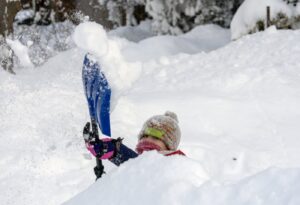
24 – Bitter cold and a major winter storm caused widespread flight cancellations and delays across Canada, leaving travellers stranded at major airports including Toronto Pearson International Airport. Passengers described exhaustion and frustration as airlines rebooked or cancelled flights, with more than 20 per cent of Pearson arrivals and departures scrapped. Environment Canada warned of extreme wind chills, heavy snow and reduced visibility in Ontario, with frigid conditions stretching from Atlantic Canada to the Prairies.
24 – U.S. President Donald Trump threatened 100-per-cent tariffs on Canadian goods over Ottawa’s trade talks with China. In a social media post, Trump referred to Prime Minister Mark Carney as “governor” and warned Canada against acting as a transit point for Chinese products. Canada’s trade minister said there was no pursuit of a free-trade deal with China, calling recent talks a tariff resolution. The federal government said it remained focused on strengthening Canada’s economy and diversifying trade partners.
25 – Blizzard conditions with lots of snow, wind and bone-chilling temperatures wreaked havoc for residents in and around Toronto. A powerful winter storm snarled most travel across Canada’s largest city, with hundreds of flights delayed or cancelled and treacherous road conditions on highways. Some parts of the GTA were expecting up to 50 centimetres of snow by the morning. T
25 – Parti Québécois Leader Paul St-Pierre Plamondon said Quebec’s independence referendum debate had already begun. Speaking at a party convention, St-Pierre Plamondon accused Prime Minister Mark Carney of launching a new federalist campaign through recent comments on Canadian unity. Carney described the 1759 Battle of the Plains of Abraham as the start of a partnership between French and English people in Canada. St-Pierre Plamondon rejected that framing, saying Quebec’s identity exists independently of Canada.
26 – Creditors of former Montreal mayor Denis Coderre have approved a plan allowing him to repay a fraction of his personal debt. Bankruptcy records showed Coderre owes about $1.1-million, with a repayment plan of instalments of $240,000 over five years. The proposal was approved during a brief virtual meeting attended by representatives from Revenu Québec and the Canada Revenue Agency. Coderre said he was satisfied the plan was accepted and said it gave him a path forward.
26 – Marineland’s remaining beluga whales and dolphins will not be euthanized after Ottawa conditionally approved a plan to export them to the United States. Fisheries Minister Joanne Thompson said final permits would be issued once additional information was provided by the shuttered Niagara Falls park. The move followed warnings from Marineland that the animals faced imminent death without federal approval. Ontario Premier Doug Ford supported the decision, saying the animals would have better living conditions.
27 – The Liberal government paused efforts to move a hate-crime bill through the House of Commons in order to prioritize the passage of new bail legislation. The justice committee passed a motion this week to halt the clause-by-clause study on the hate crime bill C-9, allowing government officials to shift focus to the bail bill, C-14. The move follows calls from the Conservative Party and an agreement between the Liberals and Bloc Québécois to amend Bill C-9. Among other measures, Bill C-9 would create new crimes of obstruction and intimidation to protect places of worship, while Bill C-14 would make bail more difficult for a variety of crimes.
27 – Country artist Cameron Whitcomb was among the top nominees at this year’s Juno Awards with five nominations. Whitcomb is up against Justin Bieber, Tate McRae, and The Weeknd in several major categories, including fan choice. The British Columbia singer said the recognition marks a turning point after building his career post–American Idol. The Junos will be handed out on March 28 at a gala, and on March 29 during the televised broadcast.
28 – The Bank of Canada held its key interest steady at 2.25 per cent as economists widely expected. It’s the central bank’s first interest rate announcement of the year. Bank of Canada governor Tiff Macklem said the economy has evolved broadly in line with the central bank’s projections since hitting pause on its interest rate easing cycle in December. Fresh forecasts released also showed the central bank expects the economy stalled in the final quarter of last year. But it’s expected to recover over the next two years.
28 – Moguls skier Mikael Kingsbury and ski cross racer Marielle Thompson will be Canada’s flag-bearers for the opening ceremonies of the Milan Cortina Winter Olympics. Kingsbury is among Canada’s most decorated Olympic athletes of all time with an Olympic gold medal and two silver medals. Meanwhile, Thompson won Olympic ski cross gold in 2014 and a silver in 2022. The opening ceremonies are Feb. 6.
29 – Canada’s premiers met with Prime Minister Mark Carney in Ottawa. The leaders presented a united “Team Canada” front. But interprovincial issues have caused some tension with a key one being B.C.’s frustration with the federal government’s endorsement of a possible pipeline to the West Coast. The second day of meetings came as an upcoming review of North America’s trilateral free trade agreement looms.
29 – Ottawa signed an agreement with South Korea with the goal of bringing Korean auto manufacturing to Canada. Industry Minister Melanie Joly and her counterpart signed the agreement focused on what they call economic prosperity and supply chain resilience. Joly’s department said the countries plan to co-operate on advancing a Korean automotive industrial footprint in Canada and to create domestic electric vehicle manufacturing opportunities. She said this will grow Canada’s auto sector and create good jobs.
30 – Toronto-born comedy giant Catherine O’Hara died after a brief illness. The 71-year-old’s agency said she died at her home in Los Angeles. She got her start at Second City Toronto and joined the sketch comedy troupe’s cast and the television adaptation, “SCTV.” But O’Hara may be best known as Kevin’s mom in “Home Alone” or outlandish matriarch Moira Rose in “Schitt’s Creek.”
30 – It appears a Vancouver-based company’s warehouse in Virginia won’t be turned into an ICE facility after all. Jim Pattison Developments announced it will no longer sell the property to the U-S Department of Homeland Security. It had wanted to turn the site into an Immigration and Customs Enforcement processing facility. News of the potential sale drew intense criticism with the U-S immigration crackdown and two U-S citizens being killed by ICE agents in Minneapolis this month.
30 – Pierre Poilievre will remain at the helm of the federal Conservative party after he earned 87.4 per cent support in a leadership vote. Before delegates at the annual convention voted to back Poilievre, he delivered a well-received speech — faulting the Liberals for the rising separatist sentiment in Alberta and Quebec. Despite Poilievre’s popularity amongst the party faithful, recent polling suggests Canadians as a whole remain divided on his leadership.
31 – A leader in Alberta’s separatist movement said a Conservative government would not halt efforts to leave Canada. Jeffrey Rath, general counsel for the separatist group Stay Free Alberta, said federalism remains the problem even if Conservatives are a better political fit for the province. Rath made the comments at the Conservative convention in Calgary after leader Pierre Poilievre blamed the Liberals for fuelling separatist sentiment in Alberta and Quebec. Poilievre said Ottawa has undermined young people’s confidence in the country while damaging Alberta’s energy sector and Quebec’s jurisdiction.
31 – A Liberal candidate was named in a federal byelection in the former Toronto riding of Chrystia Freeland. The Liberal Party of Canada announced family physician Danielle Martin is its pick to run in the riding of University-Rosedale. Martin heads the University of Toronto’s department of family and community medicine. Freeland stepped down as a Liberal MP on Jan. 9 after accepting a role as an economic development adviser to Ukrainian President Volodymyr Zelenskyy.
The Canadian Press
66
-65